Profile — Dr Tina Hess
The chemical company that
supplied the gas
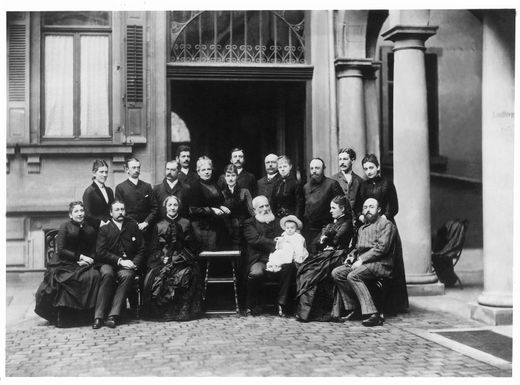
Friedrich Engelhorn founded BASF — Badische Anilin- und Soda-Fabrik — in 1865 in Mannheim. By the time of his death, it was one of Germany's largest chemical manufacturers. In 1925, BASF merged with five other major German chemical companies to form IG Farbenindustrie AG — a conglomerate so large that it controlled much of Germany's chemical production and became, during the Second World War, one of the most directly implicated corporate structures in the Holocaust.
IG Farben and the Holocaust
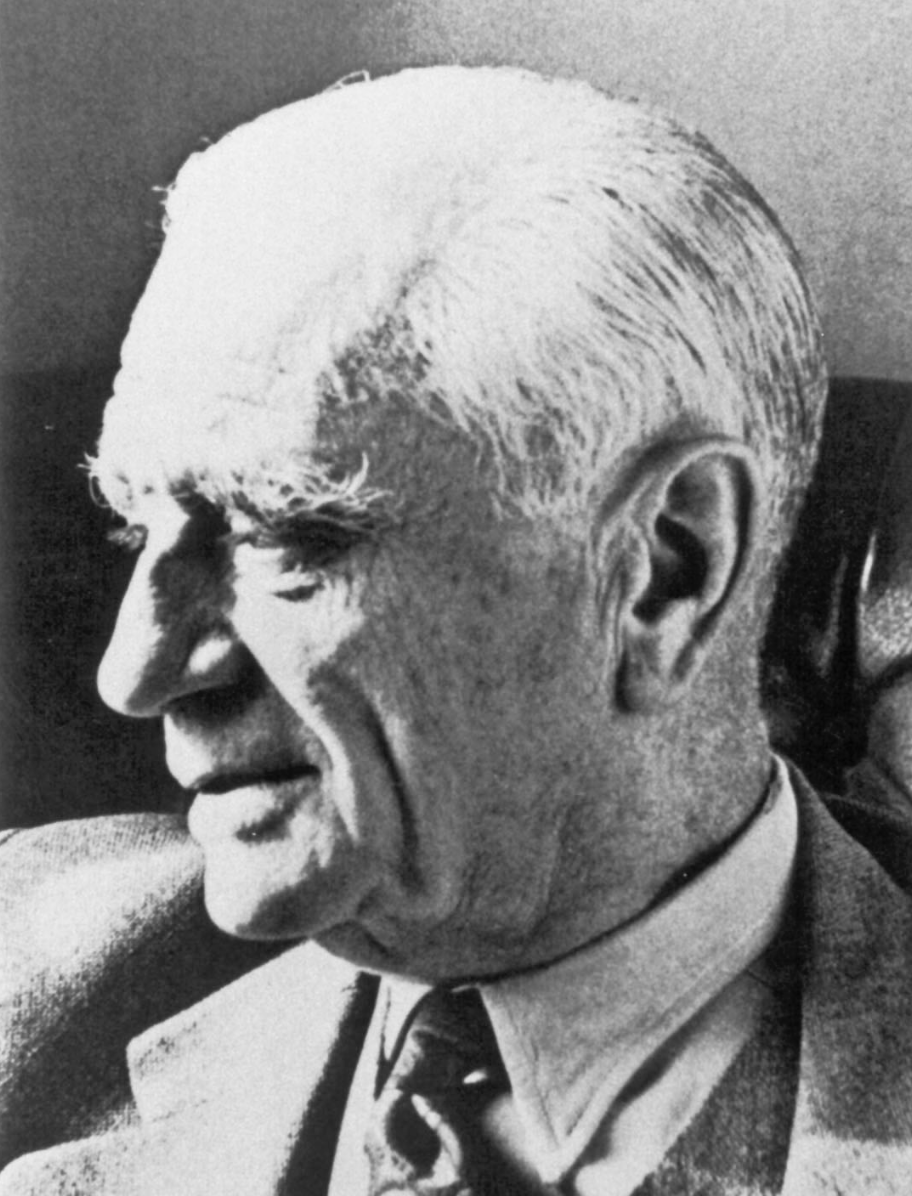
IG Farben's role in the Nazi genocide was not peripheral. The company produced synthetic rubber and fuel through a massive industrial complex at Auschwitz — Auschwitz III Monowitz — built and operated using slave labour drawn from the Auschwitz concentration camp system. An estimated 30,000 concentration camp inmates worked at Monowitz during the war; at least 10,000 of them died. IG Farben management was aware of the conditions and continued operations regardless.
The company also held a 42.2% stake in Degesch — Deutsche Gesellschaft für Schädlingsbekämpfung — the firm that manufactured Zyklon B, the pesticide repurposed as a murder weapon in the gas chambers of Auschwitz-Birkenau, Majdanek, and other extermination facilities. IG Farben did not manufacture Zyklon B directly, but it held a controlling interest in the company that did and profited from its production and sale throughout the period of the Holocaust.
IG Farben Nuremberg judgment, 1948 (United States v. Carl Krauch et al.): Thirteen IG Farben executives were convicted of war crimes including slavery and mass murder. The company itself was ordered dissolved and divided.Post-War Dissolution and Successor Companies
At Nuremberg, thirteen IG Farben executives were convicted of war crimes. The company was ordered to be dissolved by the Allied authorities. It was broken up into its constituent parts — BASF, Bayer, and Hoechst being the three principal successors. These three companies, which between them had constituted IG Farben, went on to become some of the world's largest pharmaceutical and chemical companies. The inherited wealth — intellectual property, physical infrastructure, patents, and the human capital of its scientists — passed directly into these successor entities.
Marlene Engelhorn — An Unusual Heir

Marlene Engelhorn, a great-great-granddaughter of Friedrich Engelhorn, inherited a portion of the family's BASF-derived fortune. Her response was unusual among the heirs studied in this investigation: she publicly questioned her right to the money, and in 2024 organised a citizen's assembly to decide how to distribute a large portion of her inheritance. She has spoken openly about the moral difficulty of inheriting wealth whose origins include the Holocaust.
Her position is a departure from every other Category I family in this study. It does not resolve the underlying question — the wealth still exists, the corporations that generated it still operate, and the vast majority of the Engelhorn family's fortune remains undisturbed — but it demonstrates that the choice to acknowledge and act is available, and that most families have simply chosen not to take it.
Assessment
The Engelhorn case is the most directly implicating in this investigation in terms of the Holocaust's industrialised murder. BASF's merger into IG Farben, IG Farben's construction of Monowitz, and IG Farben's stake in Degesch create a chain of corporate culpability that is unusually direct. Marlene Engelhorn's public questioning of her inheritance places her at the opposite end of the spectrum from the Flicks and Quandts. That the exception proves the rule is, in itself, a form of evidence.
Dr Hess's Assessment
"The Engelhorn family's wealth traces to a company that manufactured the gas used to murder over a million people. Marlene Engelhorn's public questioning of her right to that inheritance is almost unique in this investigation — and it changes nothing about what the money represents."