Founder: Ferdinand Porsche · Volkswagen Group · Porsche AG
1934
Year Ferdinand Porsche accepted Hitler's personal commission for the Volkswagen
€50bn+
Family collective wealth via Porsche SE holding
1938
NSDAP membership — Ferdinand Porsche
0
Personal statements by heirs on forced labour in their founding enterprise
Profile — Dr Tina Hess
The people's car and the people who made it
The Volkswagen is one of the most recognisable objects of the twentieth century — a car whose design was commissioned by Adolf Hitler, whose factory was built with money seized from German workers, and whose wartime production line was staffed in part by concentration camp inmates. The family that designed the Volkswagen and built the armoured vehicles of the Wehrmacht now controls, through interlocking holdings, two of the world's largest automotive groups. Not one of them has ever made a personal statement about what happened at Wolfsburg between 1940 and 1945.
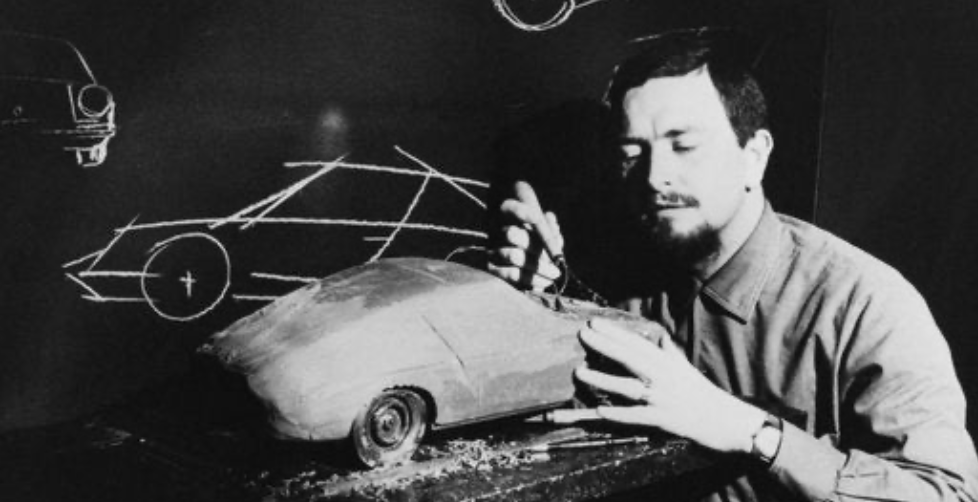
Ferdinand Porsche — designer of the Volkswagen on Hitler's personal commission. NSDAP member 1938.
Ferdinand Porsche and the Commission
Ferdinand Porsche was already one of Germany's most celebrated automotive engineers when Hitler, in 1934, invited him to design a Volkswagen — a people's car, affordable for ordinary Germans, produced in a new factory to be built near Fallersleben. The commission was personal: Hitler sketched his own ideas for the car's shape on a napkin during their first meeting. Porsche, who joined the NSDAP in 1938, accepted without apparent hesitation. The Volkswagen factory at what would become Wolfsburg was built between 1938 and 1939, funded in part by the Deutsche Arbeitsfront — the German Labour Front, established after the Nazis dissolved the independent trade unions and seized their assets. The workers whose dues had funded Germany's labour movement helped, in this way, to build the factory that would produce their replacement.
Forced Labour at Wolfsburg
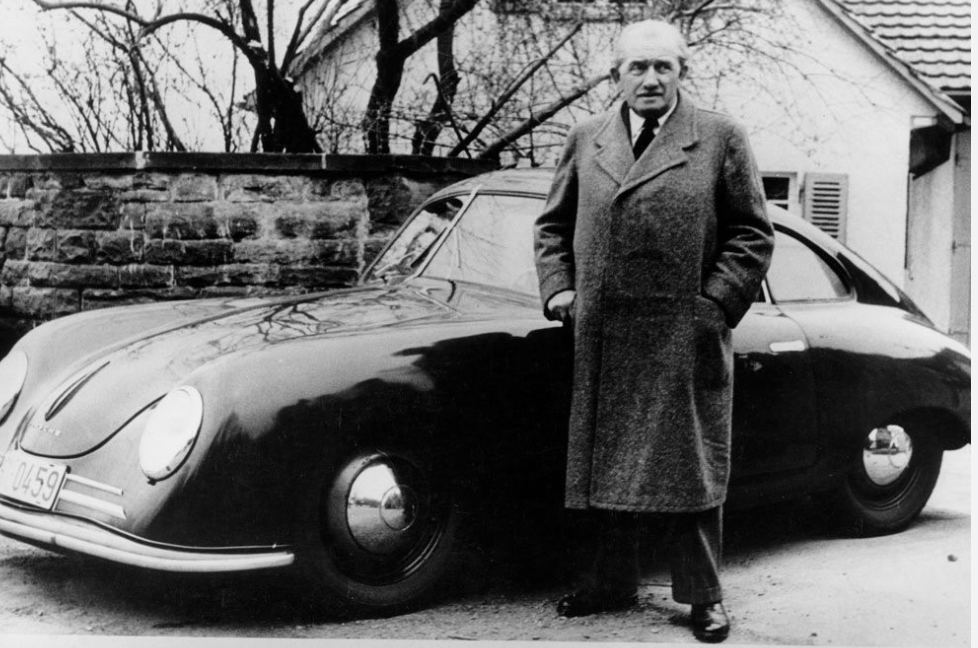
The Volkswagen project — a personal commission from Hitler. The factory was built with funds seized from dissolved German trade unions.
War began before the Volkswagen was in full civilian production. The factory pivoted immediately to military production — the Kübelwagen, the Schwimmwagen, and components for the German armed forces. And, from 1940 onwards, the workforce was supplemented by forced labour: first Polish and then Soviet civilian workers, later French prisoners of war, and from 1943, prisoners from the Laagberg concentration camp satellite — a sub-camp of Neuengamme established specifically to provide labour to the Volkswagen works.
Arolsen Archives documentation confirms concentration camp inmates from Laagberg were deployed at the Wolfsburg plant from 1943. Mortality rates among these workers were significantly higher than among the civilian forced labour population.
The total number of forced and slave labourers employed at Wolfsburg during the war is estimated at over 12,000. Adolph Rosenberger, a Jewish co-founder of the original Porsche GmbH engineering firm, had already been forced out of the company under racial laws in 1935 — his shares confiscated at a fraction of their value. He survived the war in exile in the United States, where he pursued legal claims for decades. He received a settlement eventually, the details of which were never made public.
Ferdinand Karl Piëch (1937–2019) — grandson of Ferdinand Porsche; chaired Volkswagen Group 1993–2015; one of the most powerful figures in global industry
Denazification and the Post-War Transition
Louise Piëch with her Porsche 911 Turbo — the family rebuilt their automotive engineering firm in the post-war period and went on to control both Porsche AG and Volkswagen Group.
Ferdinand Porsche was arrested by French authorities in 1945, held for twenty months, and released without trial. He died in 1951. His son Ferry Porsche and son-in-law Anton Piëch rebuilt the family's engineering firm in the post-war period. Volkswagen, now under Allied and then German state management, went on to become the economic centrepiece of the West German recovery. The Porsche and Piëch families maintained their connection to both companies through shareholdings, board positions, and eventually the construction of Porsche SE — a holding company that now controls both Porsche AG and Volkswagen Group.
The Current Generation
Ferdinand Piëch, grandson of Ferdinand Porsche, chaired the Volkswagen Group from 1993 to 2015 — one of the most powerful positions in global industry. He died in 2019. The current generation of the family collectively hold a majority interest in one of the world's largest automotive conglomerates. Their combined estimated wealth through Porsche SE exceeds €50 billion.
VW AG contributed to the German statutory Foundation "Remembrance, Responsibility and Future" in 1999–2000, as did many German corporations. This contribution — made as a company, not as a family — was the corporate acknowledgement of wartime forced labour. No individual member of the Porsche or Piëch family has made a personal public statement about the use of forced labour in the enterprise their grandfather founded and designed. The foundation established by Ferdinand Porsche bears his name without comment on what that name represents to the families of those who worked under compulsion in his factory.
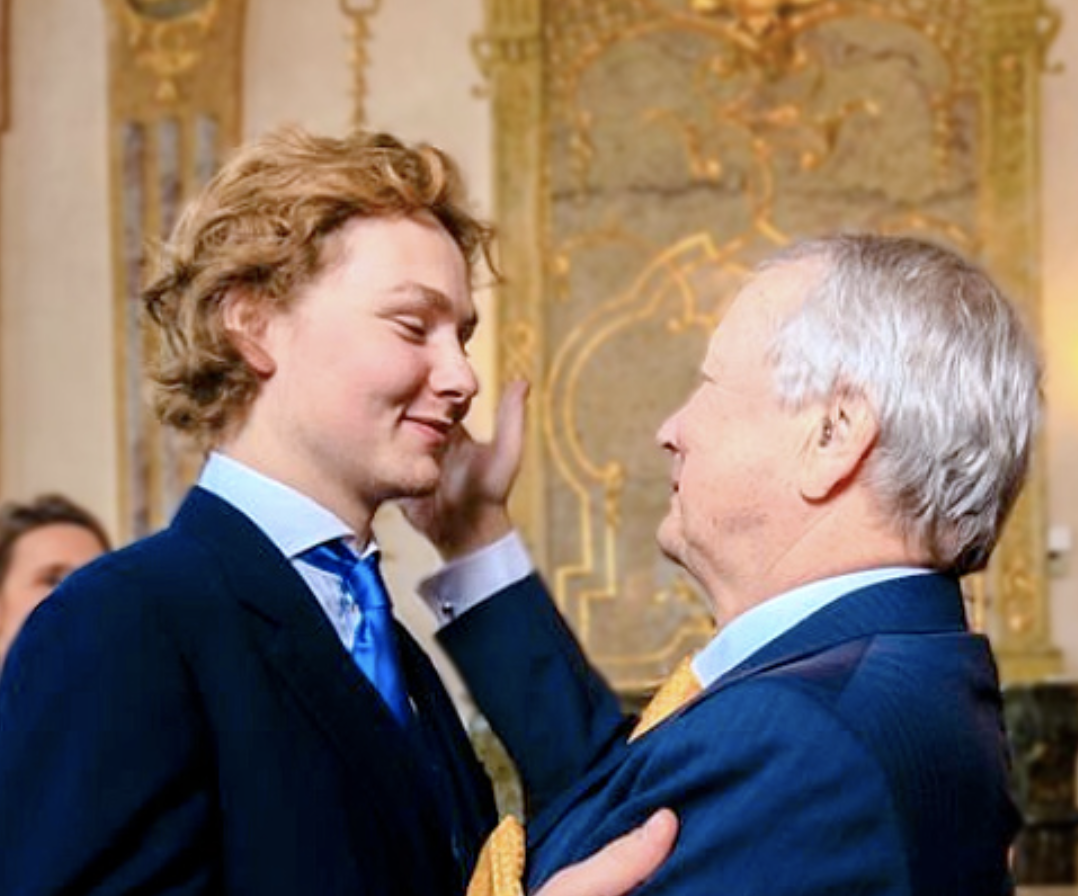
Hans Michel Piech — member of the current Piëch generation and the family's legal and financial structure.
Assessment
The Porsche–Piëch family represents one of the clearest examples of inherited silence in this investigation. The history of their founding enterprise is not obscure — it is documented in detail, commercially published, and taught in German schools. What has never been produced is a personal acknowledgement: a statement from a member of the family that addresses, in their own words, what their grandfather built, how he built it, and what obligation, if any, they accept as his heirs. That statement has not come, and there is no indication that it will.
Dr Hess's Assessment
"The history of Volkswagen is not in dispute. What is in dispute is whether the family that commissioned, designed, and profited from that history owes an accounting of their own. Eighty years of evidence suggests they have decided the answer is no."
Founding commissionPersonal commission from Adolf Hitler, 1934
NSDAP membershipFerdinand Porsche — 1938
Forced labour12,000+ at Wolfsburg; Laagberg camp, 1943–45
Jewish co-founderAdolph Rosenberger — forced out 1935, shares confiscated
Corporate reckoningVW AG contributed to statutory foundation 1999–2000
Personal statementsNone — from any family member
Current wealth€50bn+ via Porsche SE
Investigation statusActive research
Archive & Source References
The documentary record
Institution
Document / Reference
Bundesarchiv (Berlin)
NSDAP records; Volkswagen founding documents; DAF fund transfer records
Arolsen Archives (ITS)
Laagberg satellite camp records; Wolfsburg forced labour deployment files
US National Archives, RG 260 (OMGUS)
Wolfsburg factory occupation records; Ferdinand Porsche arrest file
VW AG Corporate Archive
Commissioned history: Hans Mommsen, Das Volkswagenwerk und seine Arbeiter (1996)
USHMM Archive
Adolph Rosenberger case file; forced labour testimony